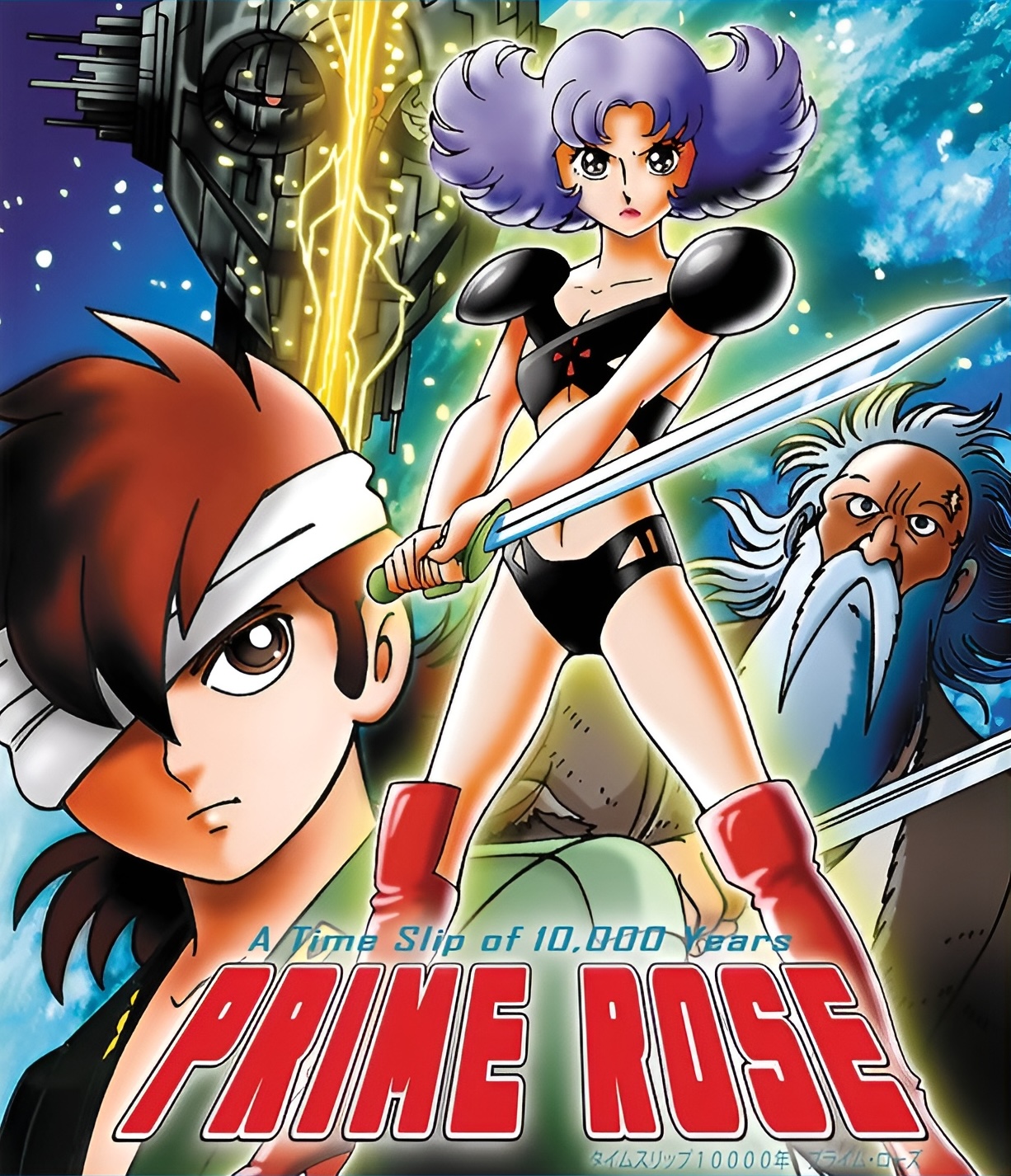
ANIME REVIEW | "Prime Rose" a Zany Sci-Fi Romp 10,000 Years in the Making
In his 43-year career, Osamu Tezuka brought over 700 stories to life in both anime and manga. This, of course, earned him the title of God of Manga, as no other writer has been able to come close to creating as much as he did. Many of his stories are seen as instrumental to what would become the anime/manga scene that is today, such as Astro Boy, Black Jack, and Phoenix. But with over 700 stories told, it’s easy for a few here and there to disappear in the cracks of time.
Perhaps that’s why I’m grateful for AnimEigo, who have made it their mission to bring back lost media. Not only have they found a treasure in the massive Tezuka library, but they’ve managed to fish out one that hasn’t been seen on Japanese television in 42 years! Prime Rose: A Time Slip of 10,000 Years was originally part of a TV charity event called “24-Hour Television: Love Saves the Earth”, broadcasted on August 21, 1983. And while the heroes in this TV movie don’t use love to save the world per se, they do manage to zone into rescue mode very quickly.
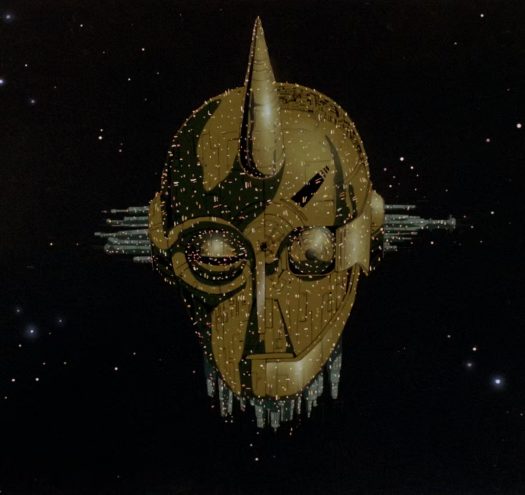
Prime Rose: A Time Slip of 10,000 Years begins with two Earth cities being zapped into the future by the massive space entity Death Mask: Dallas, Texas, and Kujukuri, Japan. Our main hero, Gai Tanbara (Yu Mizushima), sets off into the future to stop Death Mask from initiating more danger, with his little brother Bunretsu (Junko Hori) stowing away in the ship. There, they find the two kingdoms of Kukrit and Groman at constant war, with the wicked Pilar (Shuichi Ikeda) making slaves of the Kukrit people. But a beacon of hope arrives in the form of Emiya (Mari Okamoto), better known to the world as Prime Rose.
In its 84-minute runtime, the TV film checks off plenty of boxes. Characters see their loved ones murdered, only to quickly fall in love with another person in half of the film’s time. There are secrets involving royal blood, devils both in spirit and in space, and even wild creatures that appear out of the blue. The tone is also all over the place, with one instance having a brutal character’s death followed by a scene of people dancing to upbeat music.
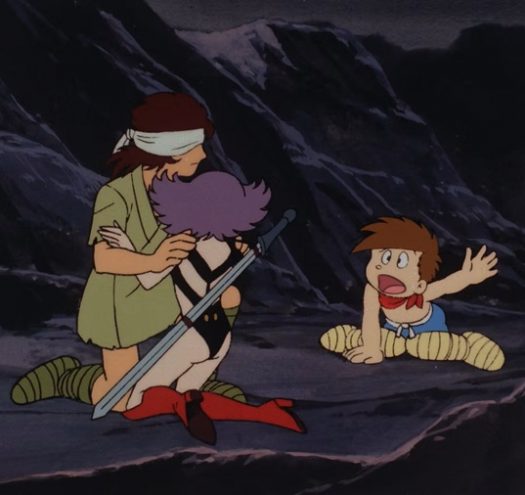
With that being said, Prime Rose: A Time Slip of 10,000 Years knows that the audience craves entertainment, and it offers it in abundance. Although limited with a TV-tier budget, Tezuka Productions doesn’t shy away from delivering some surprisingly good fights and a good dose of 80s-era chaos. Even with its preceding the likes of Fist of the North Star, Tezuka had this notion that the era of Desert Operas was soon to come, a gamble that certainly paid off with how he shaped the post-apocalyptic worlds of Kukrit and Groman. (A little fan service also doesn’t hurt, with Prime Rose going practically full-frontal as Bunretsu “shields his eyes”.)
Although it has a more dramatic tone, the film never strays away from its funny bone. When you see what’s written on the screens on Death Mask’s computers in the intro, you’ll quickly see that this is a film that shouldn’t be taken seriously. One instance even has giant cockroaches attacking Pilar’s palace, a scene that sometimes feels more Looney Tunes than Belladonna of Sadness. (As usual, keep your eyes peeled for cameos from other Tezuka works, as they’re scattered everywhere in this movie.)

On par with the film is the soundtrack, composed by Lupin the Third legend Yuji Ohno. Here, he leans more into classical orchestrations, but when the time comes for his trademark disco jazz, he goes all in with the 1970s/1980s vibes. Yes, it is weird to hear disco music being played during a moment that feels Cleopatra-ish, but it was the era of the time.
Prime Rose: A Time Slip of 10,000 Years is the kind of entertainment that has you turn off your brain and enjoy what’s on the screen. It’s nowhere near the best thing Osamu Tezuka made, but then again, Tezuka wasn’t the kind of creator who settled on crafting bad art. Prime Rose is certainly in the “corny fun” pile of the God of Manga’s works, and sometimes we need that kind of thing to get us through a tough day. At the very least, you won’t have to travel 10,000 years into the future to experience it.
FINAL GRADE:
English subtitled version observed for review. Promotional consideration provided by Erik Jansen of MediaLab PR. In stores January 20th!